A smaller floor plan does not automatically mean an easier job. Check the narrowest route, dock clearance and map controls before choosing.
Manufacturer information informs the product details; the buying analysis is our own. This is not a hands-on test.Count pinch points, not square metres
A large open room may offer a robot an easier route than a small dining area with six chairs. Walk from the proposed dock to every space you want cleaned and note the narrowest gaps. Include door openings, the space beside a laundry rack and the path under a desk. Those are the places where your cleaning plan will succeed or stall.
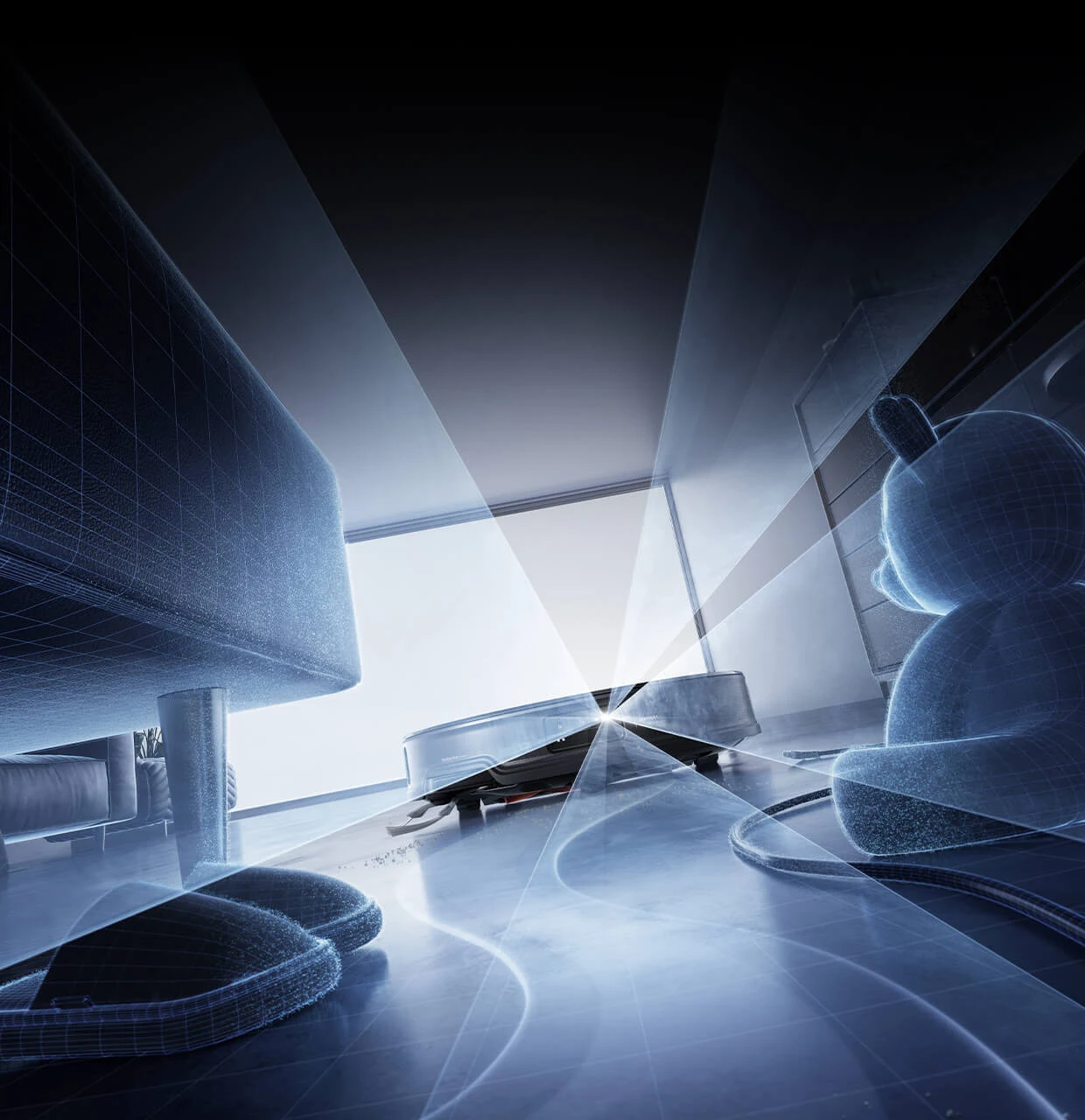
Measure furniture clearance at the lowest part of the route. A sofa can have plenty of space around its edges but a lower support beam in the middle. The Saros 10R is documented as a low-profile model, yet its published height is only one measurement. Access requires suitable clearance throughout the path, not just at the point where the robot enters.
Decide which places you actually want automated. If a narrow corner collects little dirt and needs a hand tool anyway, redesigning the whole room around it may be unnecessary. Prioritize the areas that produce frequent work. A reliable route through the kitchen and living room can be more valuable than occasional access behind every piece of furniture.
The dock cannot be an afterthought
In a compact apartment, an available plug may tempt you to put the dock behind a door. Check whether that door blocks access when open and whether somebody can reach the station for maintenance. A place that works on an empty floor-plan drawing may fail during an ordinary evening with bags, shoes and a drying rack in use.
Consider the sink route if the station has water tanks. Carrying a full tank through a bedroom is not necessarily difficult, but it is worth deciding deliberately. Keep the service area accessible and follow installation clearances. Avoid an extension arrangement that creates a new trip hazard in the same route you are trying to automate.
Mark the proposed dock space temporarily and live around it for a day. If people repeatedly step through it or move things onto it, choose another location before purchase. This simple rehearsal can expose a practical problem that no product specification will reveal. The station needs a dependable place in the room, not just a theoretical one.
A map is a household agreement
Room labels and restricted areas should describe how the home is actually used. A kitchen corner might need frequent attention, while the work area contains cables and should be checked first. Map controls are useful when they reflect those differences. Naming areas clearly makes it easier for someone else to start the intended task without guessing.
Treat the first map as a draft. A chair moved for dinner or a temporary floor mat can alter the route. Watch an initial run and update sensible boundaries where the exact app supports them. Avoid solving an access problem by endlessly increasing suction or wetness; those settings do not make a blocked passage wider.
Obstacle recognition does not eliminate preparation. Pick up items that could be tangled, dragged or damaged, and deal with spills before cleaning. In a small home, a short reset can dramatically simplify the route. It is a reasonable part of the workflow rather than proof that the robot has failed to be autonomous.
Compare the space saved with the space occupied
List what the new appliance might replace and what will remain. A conventional vacuum may still be useful for upholstery, stairs or awkward corners. If the robot adds a large dock without retiring anything, that is a real storage cost. Compare it with the repeated cleaning work you expect to reduce rather than overlooking it.
Think about the person who will handle maintenance when the room is full. Can a tank be lifted without moving the dining chairs? Is the dust compartment reachable? Can the robot be retrieved if something gets stuck? A convenient servicing position is especially valuable when there is no spare utility room to hide these jobs.
The best small-home purchase is not necessarily the smallest-looking robot. It is a complete arrangement with a clear route, useful coverage and a manageable station. Solve those constraints first, then compare extra features. That turns a crowded-room problem into a practical buying decision instead of a contest between specification lists.