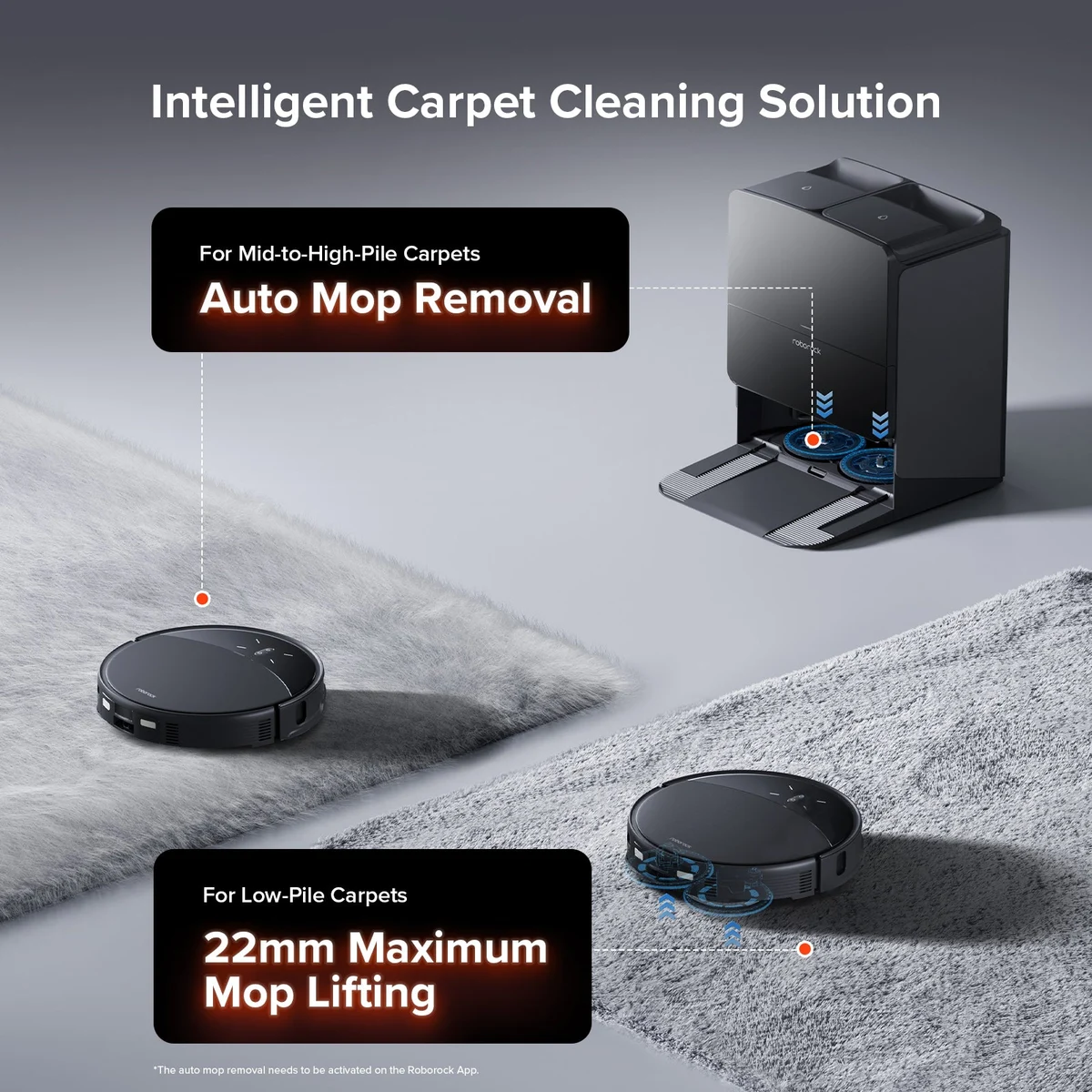
Plan the dock as a working appliance with lids, tanks and a service area, not a box that only needs enough floor space to stand.
Manufacturer information informs the product details; the buying analysis is our own. This is not a hands-on test.Draw the service space as well as the footprint
The floor footprint is only the space a dock occupies when nothing is happening. You also need room for the robot to approach, tanks or lids to move and your hands to reach the maintenance parts. Measure all three. A station tucked under a shelf can fit physically while making every dirty-water change unnecessarily difficult.
Try the movement before buying. Imagine lifting a filled tank, turning around and carrying it to the sink. A route across a crowded hallway or over a rug might be inconvenient several times a week. If carrying water is difficult for you, the handle design and accessible position deserve more attention than the dock’s feature count.
Keep the approach arrangement within the manufacturer installation guidance. Pushing the station into a recess because it looks tidier can affect docking or access. A neat location is worthwhile only when the robot and the person maintaining it can both use it reliably. Sketch the lid-open height and walking route on your floor-plan note.
Identify which chores move, and which disappear
Automatic emptying moves dust from the onboard bin into the station. Mop washing cleans the pads according to a programmed process. These functions can reduce repetitive handling, but they create their own consumable and cleaning needs. A good comparison lists the remaining chores explicitly rather than treating the word automatic as an exemption from upkeep.
Roborock describes hot-water mop washing on the Saros 10R dock. That is a documented appliance feature, not evidence that every part is sterile or that dirty water can be left indefinitely. Use the specified routine and cleaning products. Do not substitute a disinfectant or detergent simply because a general household label sounds stronger.
Look for access to the tray and the places where hair or sediment may collect. If a component is removable, confirm the procedure in the instructions. Do not force parts or assume a visually similar dock has the same release method. The ideal arrangement makes occasional deeper cleaning understandable, with the correct manual close at hand.
Water tanks and plumbing are different commitments
A tank-based station is comparatively easy to relocate, subject to a suitable power supply and installation space. You refill clean water and empty dirty water yourself. That can be entirely manageable near a kitchen or utility sink, but less appealing on another floor. Judge the repeated route rather than the first convenient fill.
Some regional packages offer refill and drainage hardware. Do not infer that feature from the standard model name or a shared promotional page. Verify the exact package, fitting requirements and local installation support. A plumbing-based setup is a separate purchase decision that can involve positioning, maintenance and installation constraints.
Avoid improvised connections or hoses that the manufacturer does not support. A dock beside a sink is not automatically ready for direct plumbing. If your proposed installation involves water supply or drainage work, use appropriate qualified help. An automation upgrade should not introduce a preventable leak risk into the room.
Listen to the household timetable
A robot moving quietly through a room and a dock emptying its bin are separate acoustic events. We have not measured either here. Plan the initial run when you can hear the complete cycle, including return and servicing. In a flat, consider a shared wall, a sleeping room and the time when somebody is taking calls.
Check which servicing events can be scheduled or adjusted on the exact model. Do not promise silence based on an app screenshot from another product. A different location or daytime schedule may solve the concern more effectively than disabling the function you paid for. Write the arrangement down so other household members understand it.
Choose the dock that leaves you with an acceptable set of chores. For one person that means no dust-bin handling; for another it means tanks that are easy to reach. When the everyday service process fits your home, the robot is more likely to remain useful instead of becoming an impressive appliance that nobody wants to maintain.