Choose capacity for the energy you need over time, and output for the devices running together. Then check charging opportunities, connectors and the exact regional version.
The calculations below are planning examples, not measured runtimes. The adjustable loss allowance is an assumption, not a tested efficiency figure for any product.A powerful socket and a long-lasting battery are different purchases
Suppose you want to charge a laptop at a campsite and occasionally run a small kitchen appliance. The laptop may use modest power for several hours, while the kitchen appliance may draw much more power for only a few minutes. One job asks for stored energy; the other asks whether the outlet can support the load at all.
Watts describe power. Watt-hours describe energy. A useful way to keep them separate is to ask two questions: can this station run the devices I want at the same time, and does it hold enough energy for the duration I need? Neither answer can be inferred from the other.
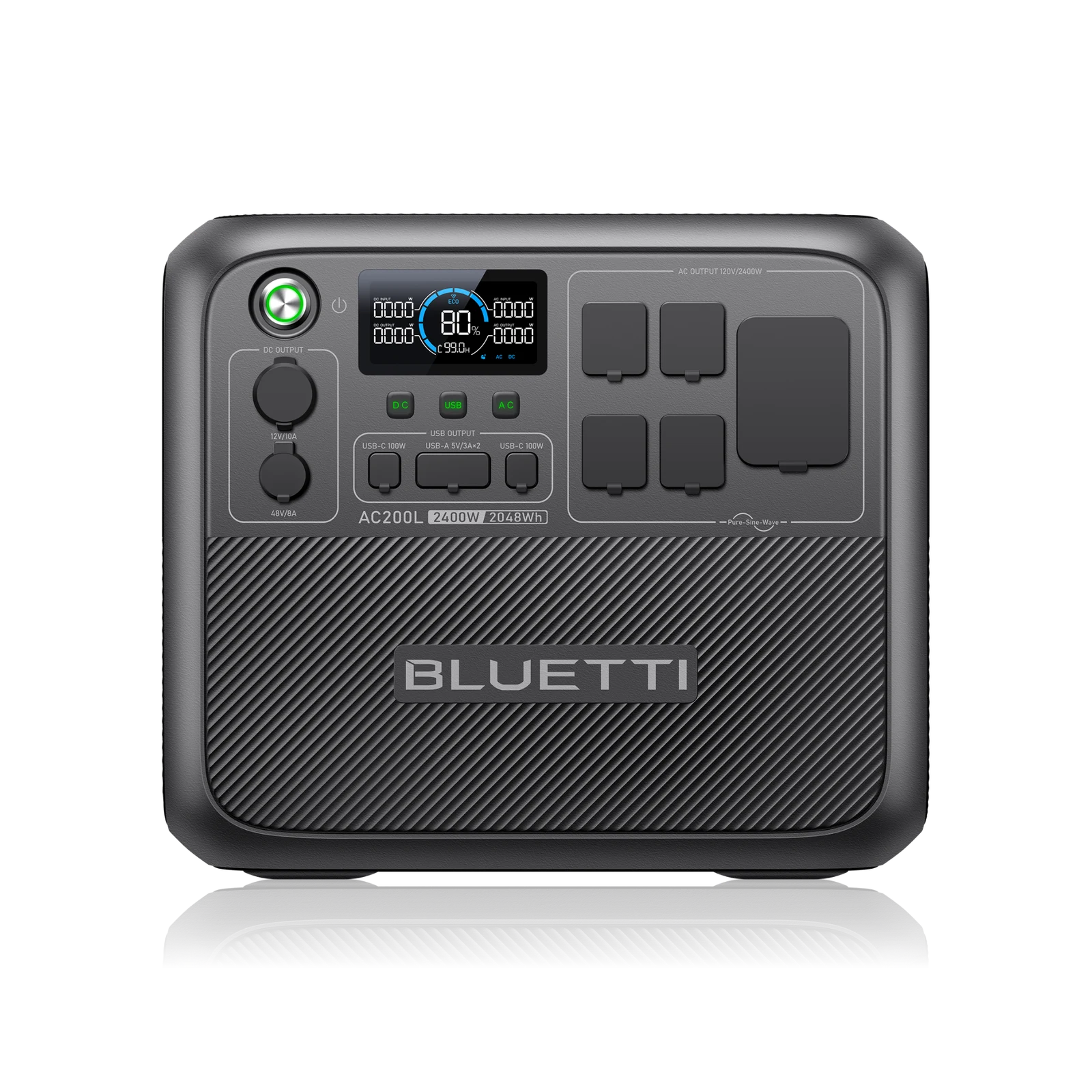
For a concrete manufacturer example, BLUETTI lists the AC200L at 2,048 Wh of battery capacity and 2,400 W of rated AC output. The first number concerns stored energy. The second concerns the AC load the unit is rated to supply. Those specifications do not mean that a 2,400 W device will run for an entire evening.
Build a small, honest list before you build a shortlist
Begin with the devices you genuinely expect to use. For each one, note an operating power figure and the number of hours it will run. Use a suitable measured value where available; a maximum rating on an adapter can differ from normal consumption. For a cycling appliance, a realistic daily energy measurement is more informative than assuming it draws its nameplate power without interruption.
Multiply watts by hours to estimate watt-hours, then add the devices together. Keep the assumptions visible so you can change them. The sample below describes a fictional day of light use; it is not a measured campsite, a promise about any laptop or a claim about a particular router.
A list also exposes priorities. If backup communications matter most, decide which loads are essential and which can wait. At a campsite, separate lighting and charging from discretionary cooking or heating. Doing that before buying is more useful than discovering during use that one convenience dominates the entire energy budget.
| Device example | Assumed load | Operating time | Energy |
|---|---|---|---|
| Router | 15 W | 8 hours | 120 Wh |
| Laptop charging | 60 W | 3 hours | 180 Wh |
| LED lighting | 10 W | 5 hours | 50 Wh |
| Total | 350 Wh |
Allow for conversion losses without inventing a runtime
Rated battery capacity is not a promise that every watt-hour will arrive at an appliance. The operating path matters: AC conversion, the station’s own power use, settings and environmental conditions can affect the result. A simple planning calculation should therefore have an explicit allowance, not a hidden assumption of perfect efficiency.
For the 350 Wh example, using an illustrative 85% usable-energy factor gives 350 divided by 0.85, or approximately 412 Wh of nominal capacity before adding any extra reserve. The 85% factor is a chosen planning assumption. It is not a laboratory result for the AC200L or a number that applies equally to every load.
For a steady-load runtime estimate, multiply nominal capacity by the chosen factor and divide by watts. Using 2,048 Wh, an assumed 85% factor and a hypothetical steady 200 W load produces approximately 8.7 hours. Real operation can differ, especially for low loads, changing loads, reserve settings and different temperatures. Use the estimate to compare scenarios, not to promise an exact finish time.
Check the busiest moment as well as the longest day
An energy budget does not establish whether the inverter can run all your appliances together. Add the loads you expect to operate simultaneously and compare that total with the applicable continuous-output rating. Then investigate startup requirements for devices that have motors or compressors. A device can have a manageable running draw but a different demand when it starts.
Avoid treating a surge or boost headline as interchangeable with continuous output. Manufacturers may define those modes differently or restrict the loads for which they are appropriate. Check the exact unit’s instructions and the appliance requirements before using a temporary capability to justify a purchase.
Heating is an especially revealing example because its energy requirement can become large quickly. A hypothetical 1,500 W heater running for one hour consumes 1,500 Wh before allowing for conversion losses. That is arithmetic, not a runtime test. A station can support the load while still being poorly matched to keeping it running for many hours.
A second day changes the charging question
For a short outing, you may be able to begin fully charged and use the station without recharging. For a longer trip, the charging opportunities become part of the system: a mains outlet before departure, a supported vehicle-charging arrangement or a compatible solar setup.
A panel’s nameplate wattage is not a guaranteed daily energy harvest. Exposure, shading, angle and conditions change what you receive. If a panel arrangement is central to the trip, check compatibility and the station’s specified input limits, not just the connector shape. Keep the manufacturer’s voltage and current requirements together when selecting equipment.
Do not assume every solar-generator package contains the same hardware. In many listings, the phrase describes a battery-and-panel combination rather than a different battery technology. Compare the exact station, panel, cables and adapters included in the selected package, and consider where each component will be stored and used.
The practical shortlist lives around the sockets and handles
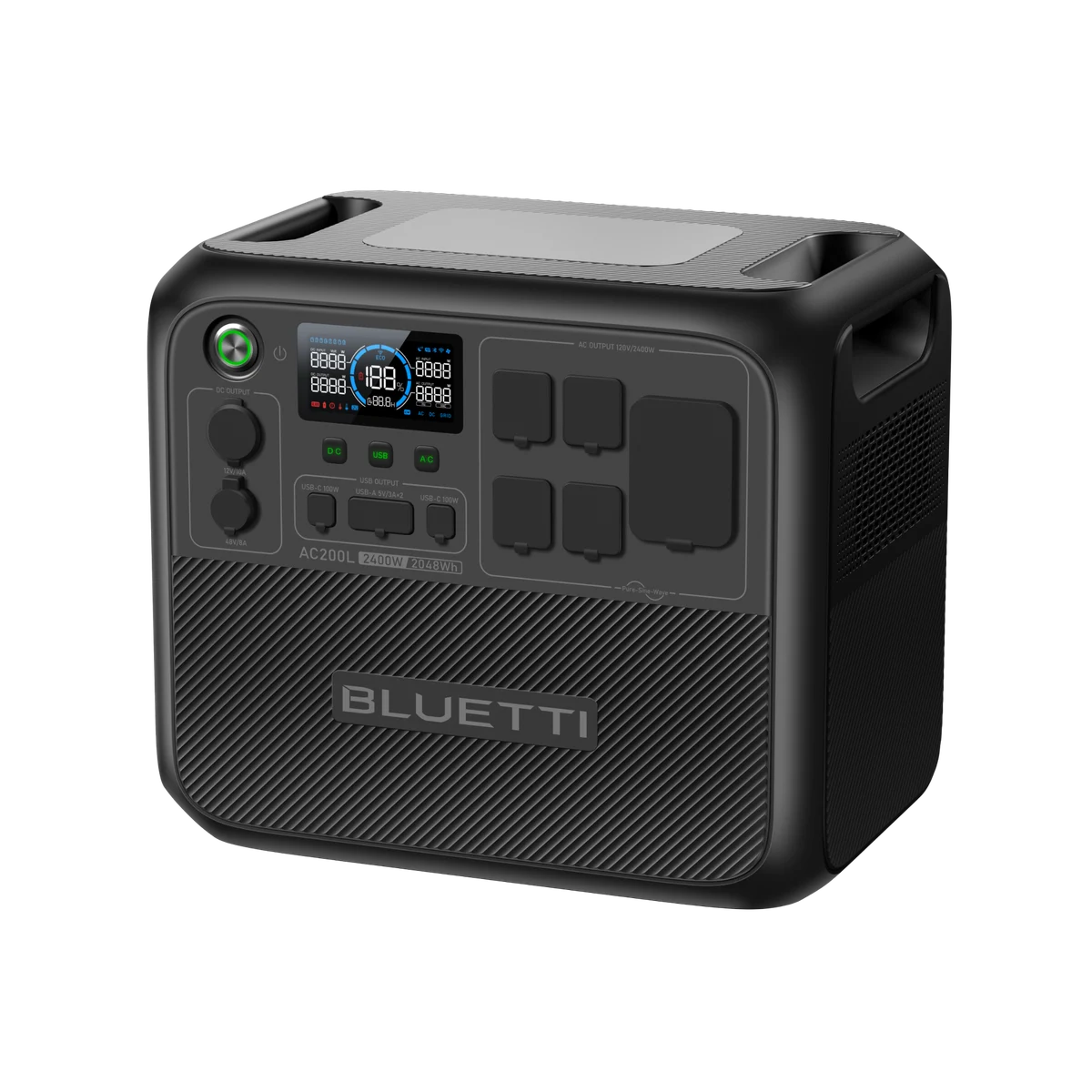
Once the numbers make sense, look at the connections. Does the regional model have the socket type and voltage your appliances need? Are the supported USB charging profiles appropriate for your devices? How many of those connections can you actually use together under the unit’s limits?
The regional question is particularly important when photographs are shared across markets. A familiar product name does not prove that the sockets, electrical ratings or supplied charging accessories match your country. Verify the exact SKU and package, especially when comparing a local listing with a manufacturer page from another market.
Portability is also a routine, not just a handle. Decide who will carry the station, where it will sit in a vehicle and how often it will move. A larger battery can solve the energy problem while creating a transport problem. Give access to ventilation and the manufacturer’s placement instructions the same attention as capacity.
Know the difference between powering a device and powering a house
Running a compatible appliance from a power station’s outlet is not the same as connecting a battery system to household wiring. Never backfeed a wall socket. A home-integration arrangement needs equipment approved for that purpose and qualified installation as required locally; a larger battery does not remove that distinction.
Follow the selected product’s instructions about moisture, temperature, ventilation and charging. Do not infer waterproof operation from outdoor promotional images. If the use involves equipment with critical continuity requirements, seek the equipment supplier’s guidance rather than relying on this general consumer buying guide.
Even for ordinary use, plan what happens when energy is low. A backup plan should identify which devices stay on, what can be switched off and where recharging will come from. The display showing a percentage is useful, but it is not a substitute for deciding those priorities beforehand.
Turn the calculation into a purchase you can explain
A sensible shortlist should survive a simple explanation: these are my devices, this is the longest period I need them, this is the busiest simultaneous load and this is how I will recharge. When those statements are clear, the relevant product class becomes easier to identify.
Use the AC200L figures here as an example of how to read a specification, not as a requirement to buy that model. For a small lighting-and-charging kit, a lower-capacity station may be more convenient. For larger loads or a longer reserve period, investigate the complete charging and expansion arrangement rather than purchasing capacity in isolation.
Finish by checking a current new-product listing for the exact regional unit and bundle. Price, included panels and accessories can change the comparison. We have not inserted an unverified discount or a placeholder purchase link; the useful next step is to match a real offer to the energy plan you have just built.