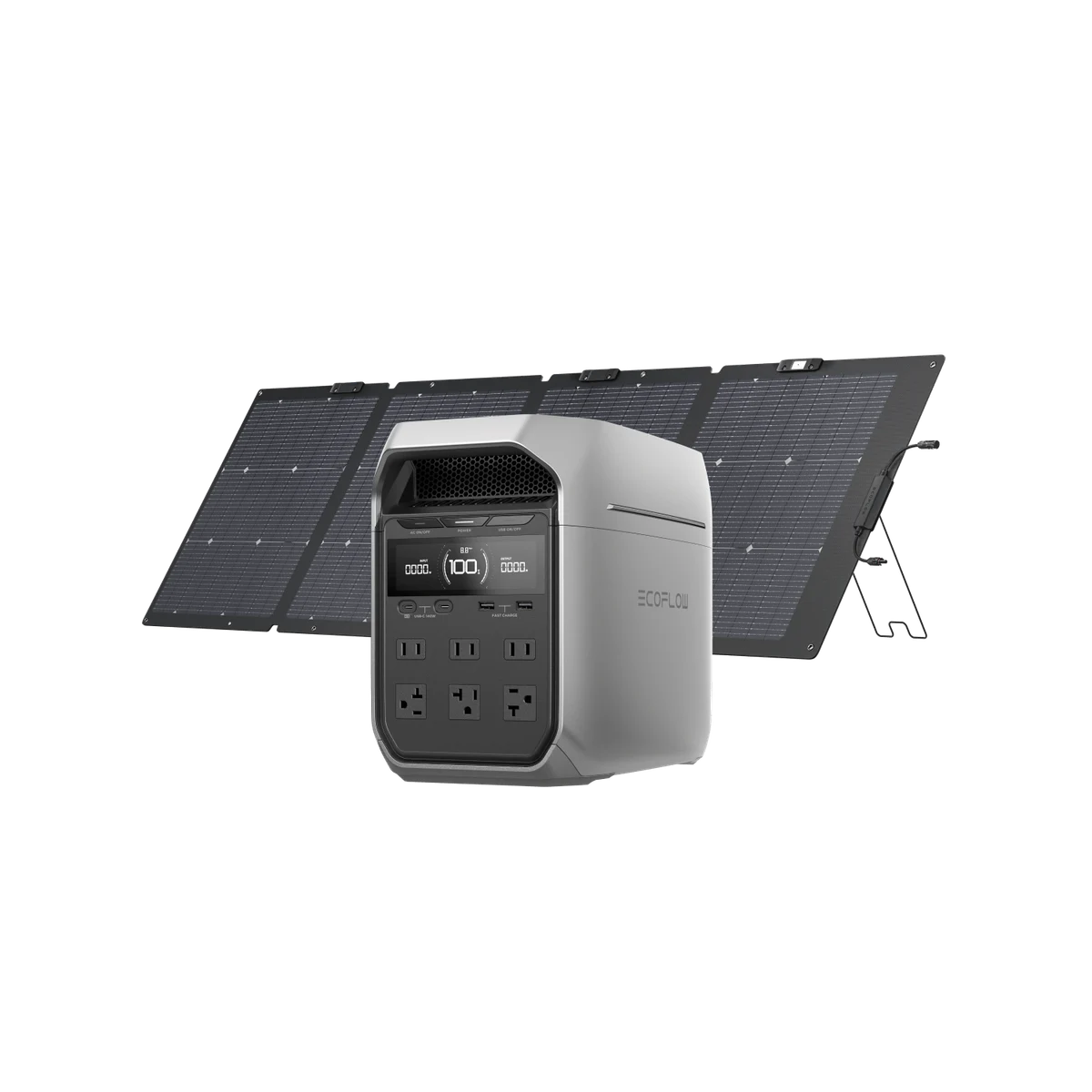
Verify the supported panel arrangement, then compare realistic daily energy needs with usable charging opportunities. A compatible panel is not a promise of its nameplate output all day.
Manufacturer information informs the product details; the buying analysis is our own. This is not a hands-on test.Plan the input before choosing the panel size
The station’s solar input has limits for electrical characteristics and connection. Panel wattage alone cannot establish compatibility. Read the exact voltage, current and connector requirements for the unit you intend to buy. A familiar plug shape or a similar capacity does not make one station’s recommended panel arrangement safe for another.
Use approved combinations and the relevant instructions. Do not improvise series or parallel connections because an online diagram produces an attractive total wattage. Electrical limits need to be understood under the applicable operating conditions, not only at a single advertised nominal point. If uncertain, use manufacturer support or appropriately qualified guidance.
Count the accessories too. A panel purchase may need a specific cable or adapter, and a station photo may show optional hardware. Confirm the complete selected package. The most useful pre-purchase list includes the station, panel, required supported connections and where everything will be used, not just two wattage figures.
Find the sunlight while keeping the station suitable
A panel and a station may need different environments. The panel needs useful light; the station needs conditions that follow its operating guidance, including protection and ventilation. Do not assume all components tolerate rain or direct heat because they appear in an outdoor photograph. Check the separate ratings and instructions.
Look at the actual campsite, balcony or stopping place. Trees, buildings and the time of day can limit usable light. A location that is sunny for an hour is different from one with several practical charging windows. Consider whether you can reposition the panel safely, without obstructing paths or leaving equipment where it might be damaged.
The required cable route can limit placement as well. Avoid creating a trip hazard or using unsupported extensions to reach a distant bright area. A modest panel in a manageable position can be more useful than a larger setup that the site cannot accommodate. Practical deployment is part of the purchase, not an issue to solve afterwards.
Think in daily watt-hours, not all-day watts
A panel’s nameplate output is not a guarantee that it supplies that power continuously. As an arithmetic example, an average 120 watts accepted over three hours would contribute 360 watt-hours before considering how the system accounts for charging losses. This is an assumed scenario, not a forecast for the equipment in the picture.
Compare that possible contribution with the devices you intend to run each day. If the load plan is 600 watt-hours, the illustrative 360-watt-hour contribution leaves a gap. You would need another supported charging opportunity, reduced consumption or a different validated plan. A large battery can postpone the gap but does not remove it indefinitely.
Leave room for cloudy periods and practical interruptions. Do not design a trip that requires a perfect charging day to meet essential needs. A contingency arrangement is especially important where communications or other important tasks depend on power. This guide does not offer a guarantee for critical or medical equipment.
Make the setup repeatable before taking it away
Try the supported equipment in suitable conditions while you can consult instructions and support. Observe whether the station accepts input, and learn how to position and secure the panel as directed. A display reading during a brief trial is useful feedback, but not a complete seasonal performance measurement.
Check the packing routine after the trial. Panels, connectors and cables need sensible storage, and large folded equipment still occupies space in a vehicle. A station labelled portable does not make every accessory equally convenient. Match the complete setup to how often you move and how much time you want to spend deploying it.
Buy solar support for a defined charging opportunity. When the electrical arrangement, physical position and daily energy budget agree, a panel can extend the usefulness of a station. Without those three checks, increasing nameplate watts can simply make the equipment bigger while leaving the real charging problem unresolved.