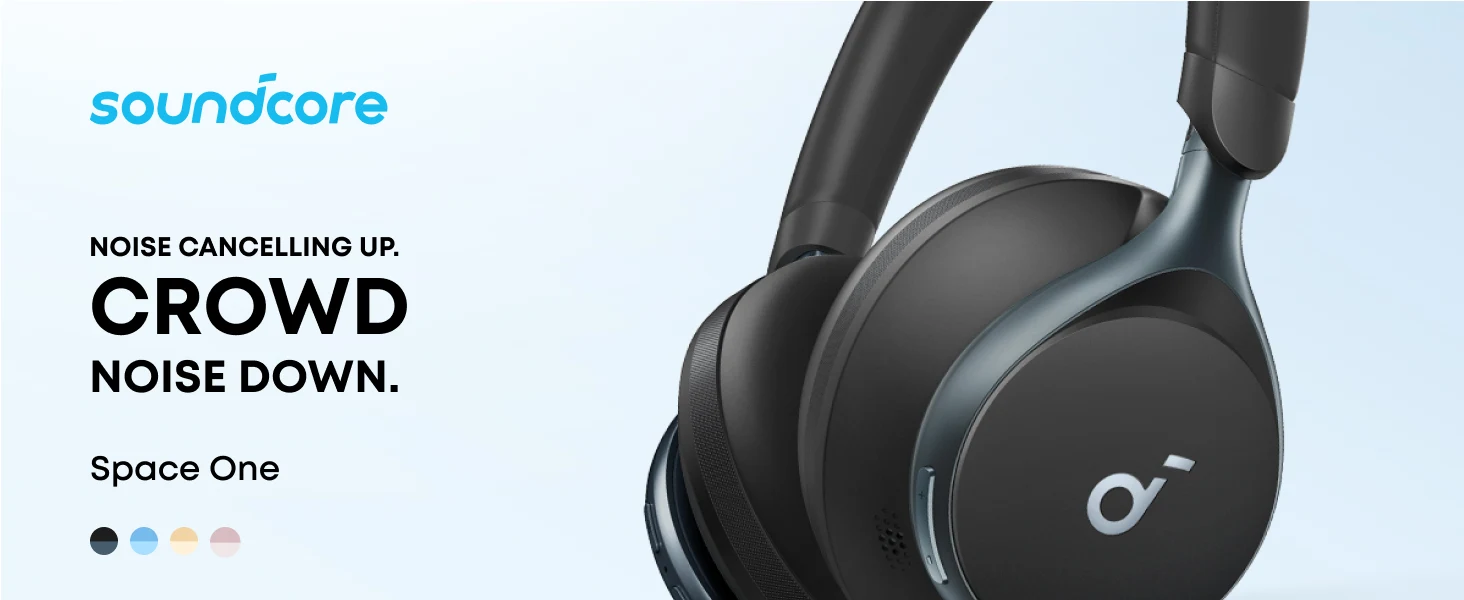
Fit creates the baseline. ANC changes the listening environment; transparency helps with some surroundings. None guarantees safe awareness or hearing protection.
Manufacturer information informs the product details; the buying analysis is our own. This is not a hands-on test.The physical fit comes first
Earcups create a physical barrier around your ears. Their fit affects how outside sound enters and how the music is perceived. A gap caused by glasses, a poor position or movement can change the result. Before adjusting an electronic mode, check that the headphones sit comfortably and consistently. Better settings cannot necessarily compensate for an unsuitable fit.
Do not tighten the headband simply to chase a stronger seal if the result is uncomfortable. Fit is a balance you need to sustain for the intended session. Ear shape and pressure tolerance vary, so a manufacturer comfort claim is not a personal guarantee. Testing the physical arrangement is a separate question from reading a driver specification.
Choose a trial situation that reflects your use. Sitting for a few minutes in a quiet room reveals less about a commute with glasses than wearing them in a comparable routine. Check return conditions if you cannot try them first. A practical purchase leaves room to discover a mismatch without having to pretend the specification proves otherwise.
ANC does not turn off the outside world
Active noise cancellation uses an electronic system to reduce certain unwanted sounds. Models and environments differ, and we have not measured the performance of the products shown here. The important buying point is that a manufacturer lab percentage does not mean every noise in every place is reduced by that amount.
A changing voice, a sudden sound and a continuous background noise can produce different experiences. Do not promise total silence because a product advertises adaptive cancellation. Identify the repeated distraction you want to address and evaluate that setting in a suitable situation. This keeps expectations realistic without dismissing a genuinely useful feature.
Consumer listening headphones are not a substitute for certified hearing-protection equipment in hazardous noise. An apparently quieter experience does not establish a protected workplace exposure. Where specialist protection is required, follow the relevant safety process and use suitable equipment. A music-oriented feature list is not an occupational safety assessment.
Transparency is a listening mode, not a safety system
Ambient or transparency modes aim to make some surroundings easier to hear while wearing headphones. Their practical behaviour depends on the product and situation. They do not guarantee that every warning, announcement or approaching vehicle will be heard clearly. When awareness is critical, pause and remove the headphones rather than depending on a setting.
At a desk, an ambient mode may be useful for a brief conversation. On a busy street, conditions change quickly and wind or traffic can complicate the experience. Judge the setting by the task, not by the idea that it lets you ignore everything else. Awareness remains the responsibility of the person using the product.
Check how to switch modes before taking the headphones out. If the only method you know requires opening a phone app, a sudden conversation can become awkward. Learn the supported control and decide which default suits each routine. A familiar interface makes the modes more useful than keeping every setting enabled without a purpose.
Make a small, repeatable listening check
Use familiar audio at a comfortable level and compare the supported modes in the same environment. Keep the fit consistent so you do not accidentally compare a good seal with a poor one. This is a personal usability exercise, not a laboratory cancellation measurement. It can still reveal which arrangement serves your everyday task.
Check whether the preferred mode stays selected after a restart or device change. Update supported firmware when appropriate and recheck important settings afterwards. Avoid assuming an app interface from another model behaves identically. The best arrangement is the one you can reproduce without spending each listening session troubleshooting.
Buy noise-control features for a specific problem, then evaluate fit and operation around that problem. A headphone that makes a shared workspace less distracting can be valuable without claiming perfect silence. Clear expectations lead to a more useful choice than treating ANC, isolation and transparency as interchangeable badges on a box.