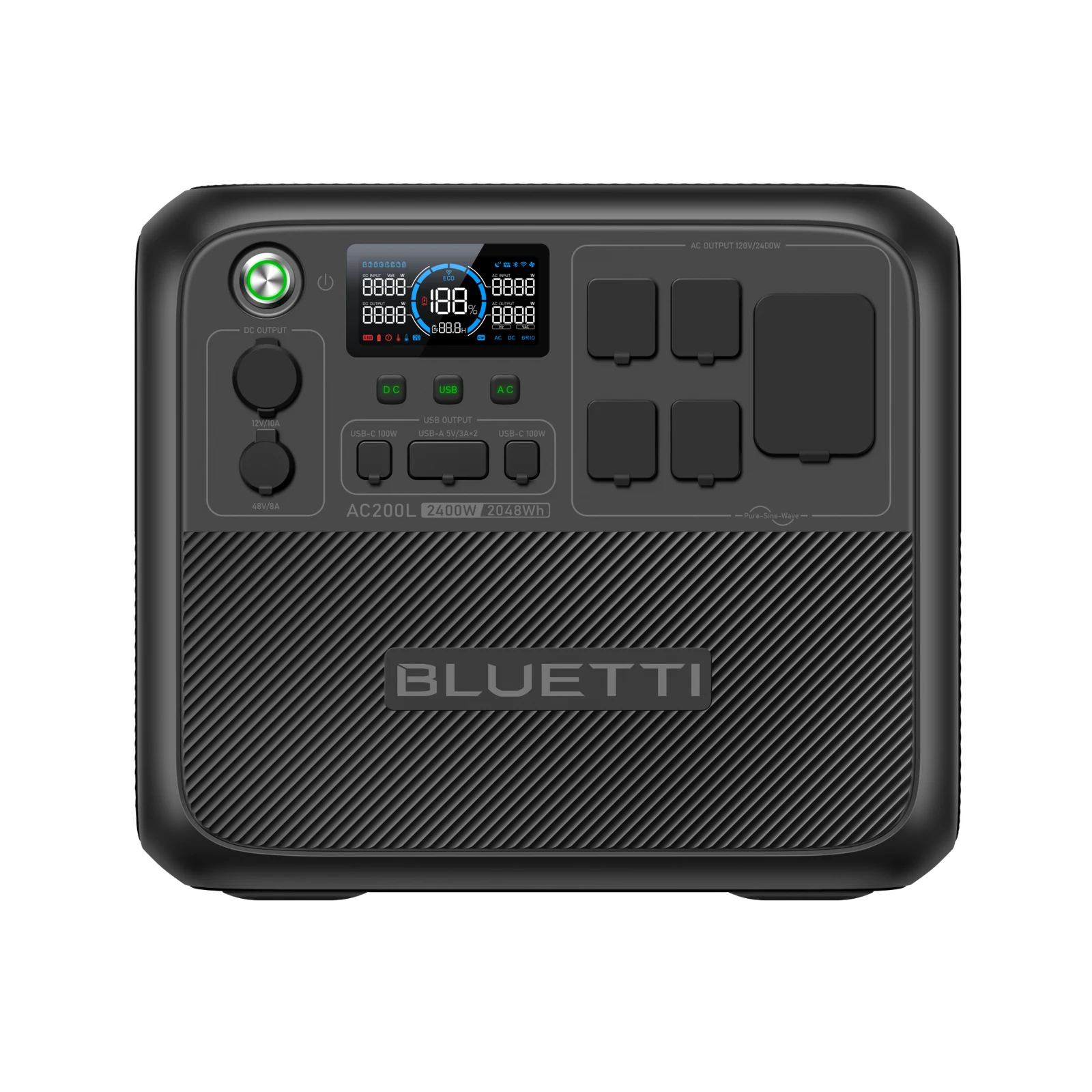
The AC200L offers a substantial documented energy reserve. It is worth considering when your load plan needs that reserve and you can handle its placement and charging routine.
Manufacturer information informs the product details; the buying analysis is our own. This is not a hands-on test.The details at a glance
- Battery capacity
- 2,048 Wh
- Rated AC output
- 2,400 W
- Model
- AC200L; verify regional sockets
Capacity answers how long; output answers what can start
A power station can have enough output for an appliance and still run it for less time than you hoped. Conversely, a substantial battery does not permit an unsupported load. Keep these questions separate. List the devices, their operating power and the intended hours, then investigate startup requirements and simultaneous use before comparing models.
The AC200L is listed with 2,048 watt-hours of capacity and 2,400 watts of rated AC output. Those are manufacturer specifications, not a guarantee of a particular appliance runtime. Conversion losses, temperature and device behaviour influence the result. Treat the figures as boundaries for a scenario rather than a ready-made answer to every household need.
For an assumed constant 200-watt load and an assumed 85 percent usable-energy allowance, arithmetic gives about 8.7 hours. This is an illustration, not an AC200L measurement. A device cycling on and off requires a different assessment. Use the estimate to create a shortlist, then validate the intended equipment and conditions.
Give the reserve a specific job
A larger reserve can be useful when charging opportunities are infrequent or several modest loads must operate over a long period. It is less convincing when your only requirement is occasional phone charging. Buying additional capacity without a use plan can add handling and storage demands while leaving most of the purchase unused.
An outage scenario should distinguish essentials from conveniences. Decide whether the goal is connectivity and light, a specific appliance or a collection of devices. Not every item needs to run at once or for the entire outage. Prioritization can reduce the required energy and make a station more useful than a vague ambition to keep the whole home normal.
Do not treat a portable unit as permission to improvise home wiring. Power appropriate devices through supported connections. Never feed electricity into a wall outlet to energize household circuits. Any building integration needs suitable approved equipment and qualified installation. The safe arrangement must be planned alongside the energy budget.
Charging belongs in the same plan as discharge
Work out where the station will be restored to a ready state. A mains charging point, compatible vehicle arrangement and solar panel system are different sources with different limitations. Compare supported input specifications and accessories rather than assuming that every charging method shown in a marketing graphic is included in the base package.
Solar planning requires a compatible electrical arrangement as well as sunlight. Panel wattage alone does not establish connector, voltage or current compatibility. Do not improvise series or parallel connections to chase a larger number. Use the manufacturer guidance for the exact unit and panel combination, and remember that available sunlight varies throughout a trip.
Leave room for ventilation and accessible connectors in the charging location. Do not assume a carrying bag is appropriate while the unit is operating. A location convenient for storage may not be suitable for use. Read the operating conditions before deciding the station will live under a bench, in a cupboard or beside outdoor equipment.
Evaluate the work around the battery
Consider the path from storage to the location where you will use it. Handles, steps and car-loading height can matter more than the label portable. If you expect frequent movement, rehearse the route and compare the physical specifications. A larger reserve that stays inconveniently stored away may offer less practical value than a smaller unit you can deploy.
Verify the regional version, socket layout and exact package when selecting an offer. Accessories and electrical arrangements differ, and a photo can include optional components. This analysis deliberately avoids a frozen price or discount. The right comparison is between currently available new-product packages with the contents you actually require.
The AC200L deserves a place on a shortlist when its capacity and rated output solve a defined job. It does not need an invented test score to be understandable. Match a realistic load plan with charging, handling and safe deployment, then decide whether the larger reserve makes your routine genuinely easier.